Why Business System Integration Is Important for Growing Companies in 2026
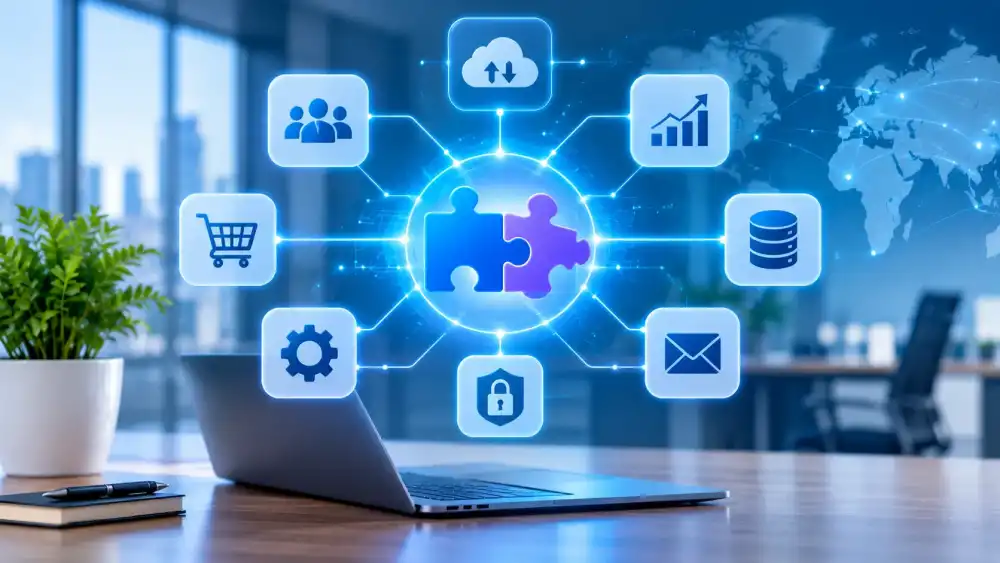
Modern businesses depend on multiple digital tools to manage their daily operations. Accounting software, customer relationship management systems, inventory platforms, employee management applications, and communication tools all play important roles in business activities.
However, when these systems operate independently, managing information becomes challenging. Employees may need to enter the same data into different applications, departments may struggle to access updated information, and business processes can become unnecessarily complicated.
Business system integration helps solve these challenges by connecting different software applications and allowing them to exchange information efficiently.
In 2026, connected business systems are becoming increasingly important for organisations looking to improve productivity, reduce manual work, and build more efficient operations.
1. Connect Different Business Applications
Using multiple applications does not always mean a business has an efficient technology environment. When software systems cannot communicate with each other, employees often need to switch between platforms to complete simple tasks.
System integration creates connections between applications, allowing information to move between different departments and platforms.
For example, a business can connect its sales platform with accounting software, inventory management, and customer management systems.
This helps organisations maintain a more connected and organised working environment.
2. Reduce Manual Data Entry
Repeatedly entering the same information into different systems wastes valuable time and increases the possibility of errors.
Integrated applications can automatically transfer relevant information between platforms whenever specific activities take place.
Businesses can benefit from:
- Automatic transfer of customer information.
- Synchronised sales and accounting records.
- Updated inventory information.
- Automated order processing.
- Reduced duplicate data entry.
This allows employees to spend less time on administrative activities and more time on important business responsibilities.
3. Improve Data Accuracy and Accessibility
When different departments maintain separate records, information can become inconsistent or outdated. This creates challenges when managers need accurate information to make decisions.
Integrated systems help maintain consistent data across connected applications.
Employees with appropriate permissions can access relevant information without depending on repeated manual updates.
Having reliable and accessible information improves communication between departments and helps businesses manage their operations more effectively.
4. Improve Customer Service and Experience
Customer information is often distributed across different platforms, including sales systems, CRM applications, support tools, and marketing software.
Connecting these systems gives businesses a better understanding of customer interactions and requirements.
For example, when a customer submits an enquiry through a website, the information can automatically reach the company's CRM platform. The sales team can then follow up without manually transferring the details.
This creates a smoother customer journey and helps businesses respond to enquiries more efficiently.
5. Use API Integration to Connect Software
Application Programming Interfaces (APIs) allow different software applications to communicate and exchange information.
API integration is one of the common approaches used to connect business platforms, third-party services, payment gateways, websites, and enterprise applications.
Businesses can use API integrations to:
- Connect websites with CRM platforms.
- Integrate payment gateways into applications.
- Synchronise accounting and inventory systems.
- Connect mobile applications with backend services.
- Exchange information with external platforms.
The right integration approach depends on the software architecture, security requirements, and business objectives.
6. Support Business Growth and Scalability
As companies expand, their technology requirements become more complex. New branches, employees, customers, and business processes may require additional applications and services.
A properly planned integration architecture makes it easier to introduce new systems without completely replacing existing infrastructure.
Businesses can gradually expand their digital environment while maintaining communication between important applications.
This flexibility supports long-term growth and helps organisations adapt to changing requirements.
7. Strengthen Security Across Connected Systems
Connecting multiple applications also requires careful attention to security. Every integration point should be designed to protect information and prevent unauthorised access.
Businesses should consider secure API authentication, encrypted communication, access permissions, activity monitoring, and regular security reviews.
Proper integration management helps maintain reliable communication between applications while reducing potential security risks.
8. Improve Business Efficiency Through Automation
System integration creates opportunities to automate workflows that involve multiple applications.
For example, when a customer places an order, an integrated system can update inventory records, generate an invoice, notify the relevant department, and update the sales dashboard.
These connected processes reduce unnecessary manual activities and improve coordination across the organisation.
Automation becomes more effective when business applications share accurate and updated information.
Conclusion
Business system integration plays an important role in creating efficient and connected organisations. By bringing different applications together, businesses can reduce manual work, improve data accuracy, simplify communication, and support better decision-making.
From API integrations and automated workflows to connected enterprise applications, the right integration strategy helps organisations make better use of their existing technology investments.
As business requirements continue to evolve in 2026, investing in connected software systems can create a stronger foundation for productivity, flexibility, and sustainable growth.
Connect Your Business Systems with Weblanza
At Weblanza, we help businesses build connected digital environments through custom software development, enterprise applications, API integration, AI-powered solutions, and modern web and mobile applications.
We develop practical technology solutions that help organisations simplify complex processes, connect their business operations, and improve overall efficiency.
Whether you need to integrate existing applications or develop a customised business platform, Weblanza can help turn your technology requirements into reliable digital solutions.
Weblanza – Your Technology Partner for Building What's Next.


Is this advice right for small businesses?
Yes. Our Blogs are written for teams that want practical digital improvements not corporate fluff.
Can Weblanza help implement these ideas?
That is what we do every day. If something here sparked a project idea, get in touch and we will help you act on it.
Where can I find more articles?
Visit our Blogs page for the full list of posts on design, development, branding, and growth.
How do I start a project after reading?
Send a short note via our contact page. Tell us what you are working on and we will suggest a clear next step.